Microsoft Surface
Mixed-Methods study: shaping future Bluetooth keyboard experiences
Project Overview
To explore the opportunity for a detachable Bluetooth keyboard experience for tablet/2-in-1 devices, I conducted a foundational mixed‑methods study to understand how people use Bluetooth keyboards. The goal was to uncover user needs, including pain points, delighters, wish lists, and purchase drivers, to build a clear picture of the product space and guide future direction.
As the study progressed, our Human Factors partners requested a deeper look into physical scenarios such as postures and charging behaviors. This led to a second phase of research, where I recontacted participants who matched our target audience for in‑depth remote interviews. These sessions provided richer insights and helped identify opportunities for future Bluetooth keyboard capabilities.
Research Goals
Understand user needs and behaviors around Bluetooth keyboard use
Identify opportunities for a detachable Bluetooth keyboard experience
Investigate postures, grips, and interaction patterns to support Human Factors considerations
Methodology
Part 1 - Foundational Survey (Exploratory Quantitative Research)
To understand the broader landscape of Bluetooth keyboard use, we began with a large‑scale exploratory survey on Dscout. Participants included tablet 2‑in‑1 device users — both Surface and competitor products — who regularly use a Bluetooth keyboard for personal tasks. This allowed us to capture patterns across a diverse set of ecosystems and usage contexts.
The survey explored:
how people use Bluetooth keyboards across devices and contexts
pain points, delighters, and unmet needs
purchase drivers and decision‑making patterns
behavioral differences across customer and competitor ecosystems
Part 2 - Deep-Dive Remote Interviews (Behavioral Qualitative Research)
To build on the survey findings, we conducted in‑depth remote interviews with a subset of participants recontacted from Part 1. These participants used their 2-in-1 tablets in portable contexts and regularly used a detachable Bluetooth keyboard. This research allowed us to explore in-the-wild setups and Human Factors considerations in more detail.
The interviews explored:
postures, grips, and interaction patterns
charging habits and battery expectations
scenarios requested by the Human Factors team
opportunities for future Bluetooth keyboard capabilities
Key Insights
⚠️ Note: all data shown is illustrative and does not reflect actual study findings
1. Top Pain Points
Insight: Users most frequently mentioned weight, connection speed, and battery performance as their top pain points.
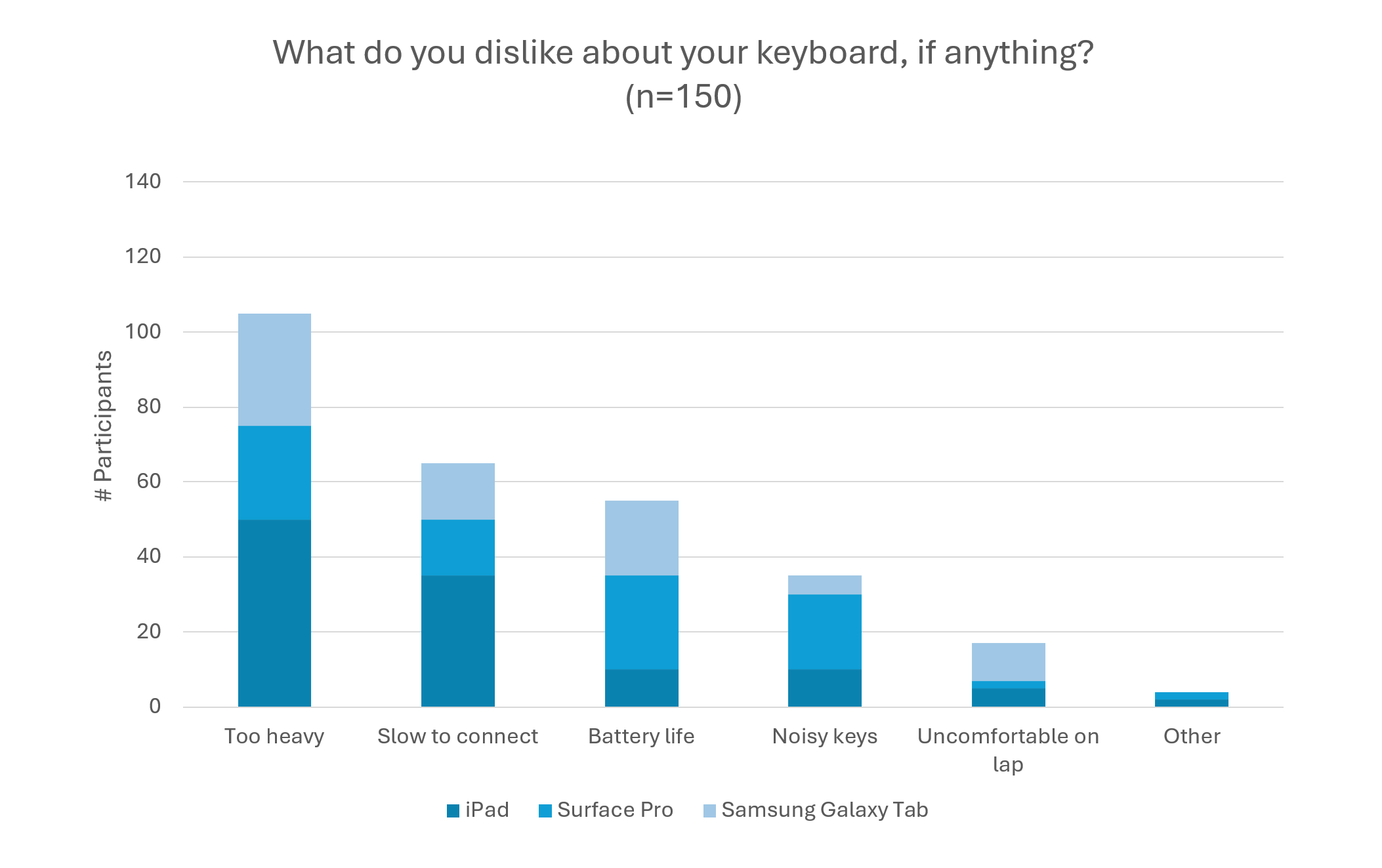
Impact: Aligned teams around the most critical experience gaps, informing early decisions on hardware design and connectivity.
2. Battery Expectations
Insight: Battery satisfaction was highest among users reporting longer lifespans, suggesting a gap between expectations and day-to-day performance.
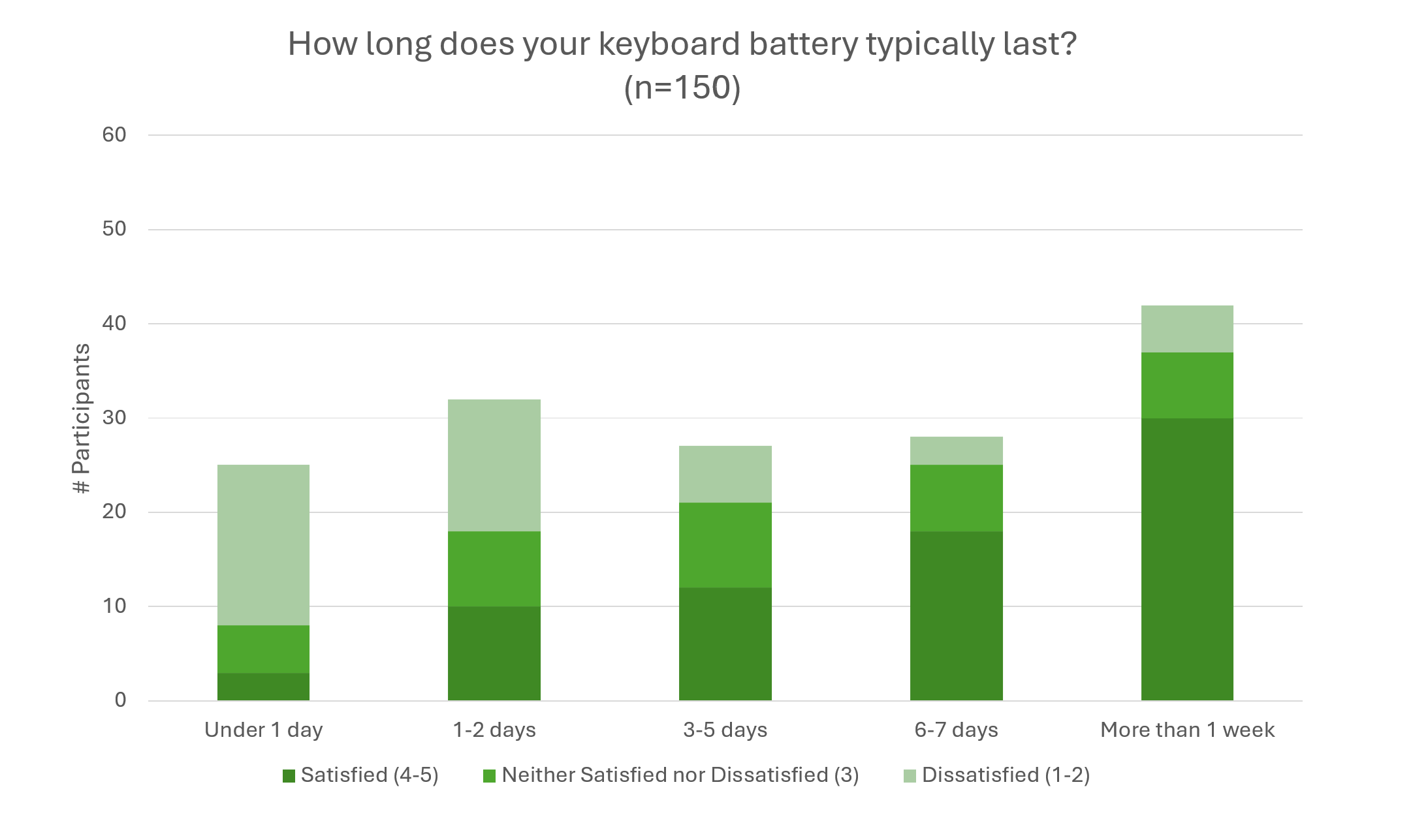
Impact: Informed battery performance targets and helped shaped messaging around expected lifespan and charging behavior.
3. Scenarios and Postures
Insight: Participants adapted their keyboard setups across home, travel, and shared environments, revealing posture and distance constraints.
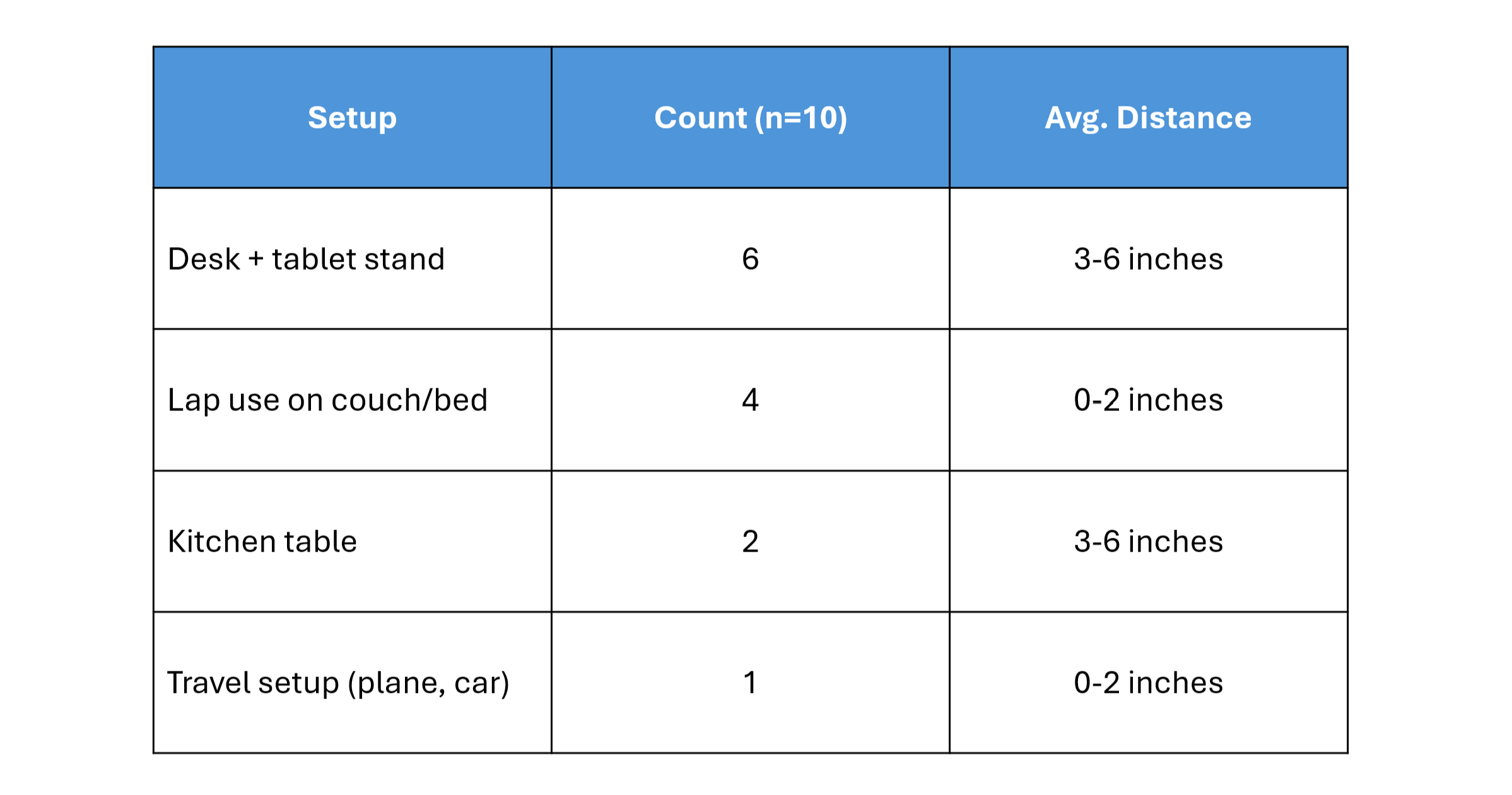
Impact: Highlighted opportunities to support lab use, posture flexibility, and mobile workflows through accessory design and pairing capabilities.
Overall Impact & Next Steps
Together, these insights created a clear and holistic picture of the Bluetooth keyboard experience. The research surfaced the most critical experience gaps and highlighted opportunities to improve reliability, comfort, and day‑to‑day usability. These findings helped shape early product direction across hardware and accessories.
Next steps would focus on validating early design directions, exploring ergonomic and portability solutions, and collaborating with design and engineering to prototype and test improvements in a lab setting for upcoming iterations.